Tuesday, October 12, 2021

Review: Atlantis Wasn’t Built For Tourists

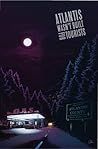
Atlantis Wasn’t Built For Tourists Atlantis Wasn’t Built For Tourists by Eric Palicki
My rating: 3 of 5 stars

In the vain of summoning things up: strong start, okay finish. It's the easiest way to describe how I feel about this book. I went in loving the title and came out with a strong meh feeling. There is some good writing and art, but its underlining issues are a little too large to ignore. But I stand by my first statement. Feel free to skip the rest of this review if you feel I don't need to break it down for you.

The book does a good job of starting off by subverting expectations. Here the thing though, if you subvert expectation, then subverting expectation becomes the expectation. Someone who does the opposite of the norm can still find himself being predictable. I appreciated the twists early on but found myself staying several panels ahead of the story by the end. I still found the writing to be good, just not overly clever.

The world-building also is fairly rudimentary and doesn't provide me with enough to stay invested. I enjoyed my time in Atlantis, but never felt I should stay. I passed through, had a beer, and went on my way. I don't want to use the word 'disappointed' but I can't think of a way to describe treating the franchise like a tourist stop. I read but didn't want to keep reading.

The art is good but felt more work went into the covers than the interior. Not just in the level of detail, but also in how the covers seemed to draw in more creative ideas. Setting expectations can be a two-edged sword. If you don't follow a great cover with great art, it's difficult to maintain readership. The key isn't to sell your story, the key is to keep selling your story.

If someone asked me if I'd recommend this book, I'd say yes but with tempered expectations. Just because something isn't the greatest book in the world, doesn't mean it isn't worth your time. You just have to accept not everything is the best. Not everyone can be Tom King.

View all my reviews

Wednesday, September 29, 2021

Review: Go Tell It on the Mountain

Go Tell It on the Mountain Go Tell It on the Mountain by James Baldwin
My rating: 4 of 5 stars

I almost feel that the Bible should be required reading for this novel. And I mean a deep understanding of the scripture. Not just knowing whatever was in a Charlton Heston movie. The entirety of the book's structure and symbolism relies so much on biblical knowledge, and with almost zero prefacing of said knowledge, that you can easily miss much of the book's meaning without knowing every verse of both testaments. I don't mean this as a knock against it, instead being more of a warning.

Though, I will say such reference isn't needed to follow along, just that it's necessary to unpack everything. There isn't much of a plot as the main character is much more of an observer than a driver. There are also long-drawn-out deconstructions of religious themes and their impact on racial lines. Frankly, the book's impact on you as a reader depends mostly on the weight of its ideas. Growing up in a fairly lite religious environment, I honestly feel much of the book was lost on me. It's still very good, it just won't stick with me as much as it might with someone else.

Prose-wise, the book is pure gold. With nearly every damn line, I am easily impressed with how beautiful Baldwin's writing is. I keep trying to come up with a way to inform people of how good it is, but I never come up with anything that does it justice. You just need to read it for yourself.

I generally feel it's not good policy to compare books, even by the same author. More so, a first novel going up against a later work.  Still, I'm just not as enamored with this novel as I was with Beale Street. The latter having a greater focus and purpose, the former more concerned with its symbolism. It can be argued, mainly by myself, that Beale might just be the better work as the author has further honed his craft. It's an unfair critique, but one I couldn't help but express.

If you're looking to tackle Baldwin, this might be a good place to start. I'm all over the place at the moment, with no real plan as to what order to read his work. It's probably not the best way to do it, but I think each work should stand on its own merits. Despite its greater symbolize to plot ratio, it's still a worthy read of nearly everyone on the planet. Not my favorite of Baldwin's work, but even his worst story is better than most's magnum opus.

View all my reviews

Wednesday, September 8, 2021

Review: Terra Nullius

Terra Nullius Terra Nullius by Claire G. Coleman
My rating: 3 of 5 stars

There's an old adage: If you have to explain a joke, then it isn't funny. The same is true for allegories in books. If you make long winded explanations of your allegories, then it isn't a good one. That's basically this entire book. It's one big allegory but goes out of its way to explain itself. It's also badly paced and underrealized. But I'll get to that in a minute.

I think this novel's biggest problem is that it begins and ends at the wrong points. The first nine chapters are completely bogus and it just fumbles around with itself because the author thought it would be clever to hide the true aspect of the actual plot. It wasn't. I've heard people refer to what happens in chapter 10 (about halfway into the novel) as a 'twist', but it's not. It's just where the book gets started. Because it's so committed to this subversion, the plot of the first half of the novel has to remain razor thin. It might seem clever when you look at it from an overview kind of way, but from a chapter by chapter reading, it's just boring.

My biggest issue with the reveal is that, in chapter 12, it gives a rather long explanation of its entire allegory. There's a settler/exploited native dynamic going on that ties in with our own history but feels the need to spell it out for you. Yeah, I understood what you were going for. It's obvious. Yet, the book seems to want to repeat the explanation over and over and over again. What comes closest to a main character even repeats this sentiment several times as if it's their sole attribute. Either the author thinks their idea was so clever that it needs to be explained, or they think we're too ignorant to understand it. Either way, it's a knock against them.

Prose-wise, the book is alright. Lines can range from extremely literal to insanely metaphorical, but I understood what was going on at all times. So it's at least competently written. There's just not a great deal to attach yourself to beyond the premise. So, when things happen in what seems like slow motion, I found it difficult to care.

The world-building is well conveyed but underrealized. What I mean is that you only know what is important, but what is important is also convenient to the plot. To say something is completely alien but also say it can speak and act like a human, contradicts your own world-building. Everything explained about the world just feels like a convenience so the story in the author's head can be told. It's also not that creative, but I think my review already conveys my opinion of that aspect.

And while the book begins in the wrong spot, it also ends before anything is truly resolved. I was starting to like the book by the end, but it wants to so badly conclude on a sour note that it left me unfulfilled. The ending feels more like a middle act plot turner and the rest of the book would deal with the aftermath. Sadly, it ends there. I don't know if the author just wants to introduce everything to write a whole series, but the pacing is so bad that I would find it hard pressed to pick up a second novel.

Ray Bradbury said that a good story with a bad ending is a bad story, and a bad story with a good ending is a good story. Yes, I'm paraphrasing but that doesn't exclude the point. The latter half of the book is certainly better than the former, but the ending doesn't feel like an ending. So I'm conflicted. Somewhat liking the last few chapters doesn't make me forget all the thumbing around and condescending explanations. But it doesn't give me a strange compulsion to read it again. Not to enjoy it of course, but it only further dissect it. Like a toad.

View all my reviews

Friday, August 27, 2021

Review: Becoming a Writer, Staying a Writer: The Artistry, Joy, and Career of Storytelling

Becoming a Writer, Staying a Writer: The Artistry, Joy, and Career of Storytelling Becoming a Writer, Staying a Writer: The Artistry, Joy, and Career of Storytelling by J. Michael Straczynski
My rating: 4 of 5 stars

One of the worst things about advice is that it's not always practical. This seems to be especially true the more subjective the opinion on a subject is. Example: you're about to leave the house and you check the forecast. It tells you it's raining outside. You look out the window and, sure enough, water is indeed falling from the sky. Here's the thing. Being told it's raining outside isn't the practical advice. It's only the information used to establish said advice. The practical advice would be to grab an umbrella or a raincoat. That seems a little obvious given the subject, but I'm merely using it as a framework for something more complex.

Not only is most advice about art (writing in this case) is subjective. It's also rarely practical. I once had a potential agent say my cover letter needed to be more vibrant. The thing is, that doesn't actually mean anything. She was telling me it was raining outside without any regard to using an umbrella. I tend to see this a little too often. Either the person giving advice doesn't know what they're talking about, or they're attempting to sandblast writing so it all sounds the same.

Is Straczynski, and his new book on writing, guilty of this? No. But I'm laying this out to explain how I approach writing advice. I don't just use a grain of salt, I unscrew the top and use the whole fucking shaker.

Before I render my judgment on if the book is any good, I also need to layout who this book is for. Unlike most works, this is more of a textbook. You might be faced with the greatest book on algebra ever written, but if you don't have a class or a job involving algebra, it's pretty much useless to you. Breaking down the audience into two groups.

The first group is fans of JMS's work who wish insight into his writing process. It carries many personal stories of his career and his perspective into the industry he's worked in for decades. The level of sharpness of this aspect really did catch my eye and I think anyone who loves his work will get something worthwhile here. So, if you're reading this review wearing a Babylon 5 T-shirt, go ahead and read this book.

The second group needs a little more justification. And that's people who are looking to becoming paid writers. I said 'paid' because you're either already a writer or you're not. Also, as a disclaimer, if you're the type who uses the label of a writer and haven't actually written anything down, this book isn't for you. In particular, there's a section of the book that calls out posers. So save yourself the heartache and avoid this book. And me.

To the point made at the beginning, this book does offer up some helpful advice. If you're looking to crack into the business and/or looking to improve your craft, you should be able to find something here that applies to you. One piece of advice though: grab a highlighter. You're going to want to mark the relevant bits.

See, that's how practical advice works.

Since I can't resist saying something negative, I'll put it down here towards the end. There are a few sections in the book that are less helpful than others. There's an entire chapter towards not shoving your ideas in writers' faces. Good advice, but the chapter could have been a lot shorter and seemed a little too personal. I know many artists face this problem. There's even a Chappelle Show skit about that very problem. So, while I understand the frustration, I doubt most of those people are going to be reading this book. Or read period.

Regardless if you're in groups A or B (or maybe both, who knows?), I'd recommend this book. The use of real world examples can get a little straining, but JMS needs to establish himself so you don't think he's talking out of his ass. Trust me. He's mostly not.

View all my reviews

Friday, August 20, 2021

Review: The Ruthless Lady's Guide to Wizardry

The Ruthless Lady's Guide to Wizardry The Ruthless Lady's Guide to Wizardry by C.M. Waggoner
My rating: 3 of 5 stars

This book was obviously written by an introvert. Not that is a knock against it. In fact, if someone offered me a choice between a book written by an introvert or an extrovert, I'd choose introvert every damn time. I merely point this out because it just stood out to me more here than it usually does. There are long excerpts of internalization and description. This is both a plus and minus, but I'll get into more in a bit. If a book deep with introversion sounds like a turnoff, stop reading this review now and write this book off ad something you're not interested in.

I'll also say this book is fun. It's intelligently written, clever, and even has a few sprinkles of genius throughout.  It's super strength strong in the prose and character department. Everything is concise and explained without making it feel you're being talked to. It's just a hands down a well-written book. Bottom line: If reading the synopsis makes you think this book is your cup of tea then it probably is.

Unfortunately, there are two major drawbacks I observed.

One, the actual plot of the book felt like it spends most of its time on the back burner. The pacing is cooked through well enough, but the increased introversion allowed the story to feel unimportant. As if the interaction between the characters is more or less the real draw and purpose of the book. The relationships are just given far more time and care, feeling like the plot is just the reason everyone is together having a good time. The characters and their time together is great, but I just wished for the plot to have a more equal measure.

Two, I honestly felt that this book's author could have written a better book. There's a real talent on display here, but the type of book it is feels a little beneath her station. If that makes any damn sense. It just feels she wrote a book that she thought would be popular (and it should be), rather than writing something that is truly inspired. Or maybe I'm just full of myself. That could easily be the case.

If you made it this far into the review, I just want to make it clear I'm recommending this book. Plot issues aside, it's still a wonderful read. I don't normally like to use the word 'fun' because it can give the impression the book is lesser than what it is. But, that's the word I keep coming back to. Fun. I'm honestly looking forward to what this author has in store for us next.

View all my reviews

Thursday, August 5, 2021

Review: Batman/The Maxx: Arkham Dreams

Batman/The Maxx: Arkham Dreams Batman/The Maxx: Arkham Dreams by Sam Kieth
My rating: 3 of 5 stars

Comic books shouldn't be art forward. There, I said it. Without compelling writing, the art serves more like a gallery than as a form of media. To be fair, comics shouldn't be writing forward either. The writing not being much if you don't have the art to direct it. Everything needs to work together in order to make a great graphic novel.

My point? This Maxx/Batman crossover has a great deal of awesome art, but little in way of a convincing story. The wording is surprisingly dense while not really saying that much. The structure is all over the damn place. Ranging from repetitive to confusing. And I would even say it's unintentionally funny.  An example on the last point, when Batman meets Maxx, he describes him as a homeless person. While I'm not sure if the ludicrous nature of it was on purpose, I couldn't help but chuckle at the idea this huge purple monster with a severe overbite was supposed to be mistaken as a regular homeless person. Greatest detective my ass.

The art is great though. While the flow in the paneling could use a great deal of work, how the characters are drawn and framed are damn near perfect. I'd probably prefer a book without wording and just the art. If there's one thing I'd have to judge against it, is that the amount of work and detail seem to hinder on the distance. The further the character(s) are away, the less amount of detail goes into the page. There is a slight, but noticeable, change from up close of a characters' face that looks degraded if the page shows the same character from the waist up. Then if you get far enough away that the characters are in the distance, they look only slightly better than stick figures. I don't mean to take away from the insane talent on display, but I also couldn't help but mention it.

I'll admit that I wasn't familiar with the Maxx character before diving into this book. But I don't think knowing more would have helped my opinion. Characterization and plot dynamics aren't the huge problems here. Especially when you consider how the book goes out of its way to explain everything to you. The whole writing side of things just feels clunky. I was glad I was exposed to such great art but reading it felt like driving over grassy hills in a 2WD sedan.

View all my reviews

Tuesday, July 13, 2021

Review: Sweet Tooth, Volume 1: Out of the Deep Woods

Sweet Tooth, Volume 1: Out of the Deep Woods Sweet Tooth, Volume 1: Out of the Deep Woods by Jeff Lemire
My rating: 3 of 5 stars

As an opening volume, it's fine. It follows one too many troupes for my taste and is just shy of the required world-building you'd expect from a first volume. I wouldn't say its problem is slow pacing or lack of good story telling. It scores good marks in both fields. It just has the inherit problem of being good, but just not good enough.

It wouldn't be the first comic series to hold off on a strong hook. Invincible is a good example of this. Of course I mean the comic version because the show couldn't hold its wad past the first episode. It's just Sweet Tooth doesn't make me feel that a hook is coming. And, as a result, I don't feel I should continue reading into further volumes.

I've always considered Lemire to be upper to mid-shelf in the writing arena. I've never hated anything of his that I've read, but I also haven't loved everything he's done. Ascender and Gideon Falls are probably two examples of his best work. Sweet Tooth just felt like another interesting but subtlety vain undertaking.

The art matches well with the story and themes. Every few pages I see something slightly clever in the panels. With comic books, it's not so much about having great art as it is having art that fits the story. Don't take this the wrong way, but the art is perfect for people who look malnourished.

In the end, I would actually give this a recommend. Your flavor palette might work better for this piece of work. It's worth your time to say the least. It's up to you to decide to continue reading further volumes or just catch up through Netflix.

View all my reviews