Tuesday, February 8, 2022

Review: Leviathan Wakes

Leviathan Wakes Leviathan Wakes by James S.A. Corey
My rating: 4 of 5 stars

I honestly didn't know they made good adventure books anymore. You would think everything that labels itself as genre fiction was either world-building or droning introspective that do everything they can to avoid the plot. But the Expanse series, or at least the first book I just finished, makes no qualms about what it is. An entertaining space adventure that is 110% character and plot-driven. Something that wants you to like it without sacrificing good writing. There are issues, that I'll of course get into, but this book is good in such an old-fashioned sense that it threw me for a loop.

While I think the driven nature of the book suits it well, I was surprised at the lack of world-building. Multi-book epics tend to go on and on about the universe the author(s) created. Though this is mostly known in high fantasy that elevates the lore so much it can give you a nose bleed, it's not uncommon in science fiction. There's a more minimalist approach here that only really gives you what you need. It wasn't a turn-off for me, but it might be for those with tissues wadded up their nostrils.

The dual narrative can also be slightly problematic. It works 90% of the time but can feel clunky when the two main characters are in the same room. It's still structured better than most other books, even otherwise good ones, and it remains committed to the concept. It allows the authors to draw out their strengths and mostly avoids their weaknesses. Mostly.

The pacing is solid, starting and ending at the right place, but can drag in a few spots. The longest chapter of the book just has the chapters watching a bunch of videos as the plot is unfolded for both reader and character. While each chapter justifies its existence as a whole, some of the areas could have been truncated.  This is especially true for one side of the last chapters of the book. As the character doesn't have much to do except reflect on his life. As it reaches the end, you (and even the characters) know what is going to happen, but can take just a little too long to get there. That being said, it's probably my only serious issue with the book.

I have a tendency to finish things that I start. Even completing really bad books just so I can complain about how bad they are (check my other reviews for more). But nine novels plus a collection of shorts is too much even for my Adamantium constitution. About halfway into the book, I wondered if I would continue. The short answer is a yes. While not the best thing I've ever read in the history of man, it is smart and entertaining. It reminds me of a Heinlein juvenile but more grown-up and containing less sexism (and, unfortunately, fewer redheads). The book just wants to tell a good story in a good way. And it didn't even have to get up its own ass to do it.

View all my reviews

Friday, January 14, 2022

Review: Light from Uncommon Stars

Light from Uncommon Stars Light from Uncommon Stars by Ryka Aoki
My rating: 4 of 5 stars

Am I picky or do I just have high standards? Probably the former, but I like to think it's the latter. I've read some books with heaps of praise that I end up giving low scores to. It makes me wonder if I'm defective or do people like certain books for inane reasons. This one is probably a mix. For the record, these thoughts don't apply to this book. I love it. But I will nick pick a few issues I think it has. Because I can't just sit back and enjoy something, I have to be overly critical of it too.

I'll say upfront that I not only enjoyed this book, but I think it's genuinely good as well. The plot is well-paced, the characters are vivid and interesting, the dialogue is strong, and it's even relevant. It's literally everything you can want in a good book. There are a few flaws, that I'll get to in a moment, but just know that you should definitely read this book at your earliest convenience.

The biggest flaw, to get the bad news out of the way, is the throughline isn't strong enough. I don't mean the character, but rather the voice. The flow from character to character feels unstructured and even somewhat lost in the earlier chapters of the book. This book has a lot to say but feels a little unclear as to who gets to say it. It slowly comes together, but can take a little bit to get there. Also, to be clear, this isn't a pacing issue. The story starts in the right place and gets right to work. Rather it took me a few chapters to get a feel for everything.

With the story that opens in such a fractured way, I was afraid that it wouldn't land the ending. As something that is 100% praise, I will say it has one of the best endings I've read in a while. It doesn't waste your time and just hits you with it like a batter looking to score a home run, which it succeeds at. Some might think it's a little too neat, but I was entirely satisfied with it.

Prose wise I think it's strongly written, offering a healthy mix of internal strife and clever character interactions. I will say that the interactions are some of the stronger aspects of the book. The dialogue and descriptions between them are charming even when they're being completely serious. We also get plenty of time alone with our characters, but this is more of a mixed bag. While what is being described fits and is necessary, it just feels far more monotone.

One last note is a plot point called the "End Plague". This idea is so damn interesting and clever that I wished the entire book was centered around it. The fact that it's not brings me back to its greatest strength and greatest weakness. I'm going out on a limb and say that this book has too many story ideas for an average-sized novel. In a weird way, it feels like two novellas having to live together in the same apartment and are forced to share a main character. While there are too many books out there that are too long for their concepts, I'm going to say this one is too short. For the time I spent with it though, I think this book is awesome.

View all my reviews

Friday, December 17, 2021

Review: The Price of the Ticket: Collected Nonfiction, 1948-1985

The Price of the Ticket: Collected Nonfiction, 1948-1985 The Price of the Ticket: Collected Nonfiction, 1948-1985 by James Baldwin
My rating: 5 of 5 stars

The problem with reading such a profound volume of work is that you can't do it justice in words. I wish I could describe to you the level of beauty and voice this collection has, but I can't. I honestly can't think anyone can. All I can do is recommend that you read it. Even more so, say not only is it good, but that it is important. Not only to be absorbed for the sake of your mind but also that of your soul. I can't describe it to you, but I will try.

The biggest problem I find with collections, especially those of the same author over a long period, is a varying level of quality. If you collect everything a writer has done, even an extremely talented one, you get the good along with the bad. Earlier works that don't hold up as well against later works that are more refined. Plus the occasional work that makes no sense, but was still published because it would make money. However, in this collection, I didn't find that to be the case. It's almost impossible to read anything by Baldwin and not come away with at least something profound. There is no good with the bad because it's all great. To say this is the gold standard of collections is an understatement.

I don't feel right picking a favorite, since everything in the collection is worth reading, but I do want to say that "The Fire Next Time" is by far the crown jewel of this collection. It may be one of Baldwin's most important nonfiction works but remains the hardest pill to swallow. I can't help but feel he didn't write it for his own time, but rather, saw where the country was headed, and wrote it for today. While I don't condone reading only one essay in this collection, if there was only one you would read multiple times, it would be Fire. In fact, everyone should read it before every school council meeting.

The weird part of my brain that feels it needs to complain about something says I need to say something about "No Name in the Street." It's overly long and tends to stray from the point on more than one occasion. Not Baldwin's best work. That being said, Baldwin's worst book is better than 90% of the stuff in publishing today.

In a more broad analysis, there's a great deal of beautifully written pain in these works. Baldwin's voice can be too easily dismissed as angry, but I feel that is too simple of an answer. Sure, there is anger, but I feel his voice is directed more at the worse world than it is at any particular group of people. A feeling that the world, or more accurately the people in it, can be better. Understanding that people can't solve any of the world's problems until they at least acknowledge the problems that lie within themselves. That's what I took away from it at least. And that might be this collection's greatest gift. That it's impossible to read and not walk away the same.

View all my reviews

Tuesday, October 12, 2021

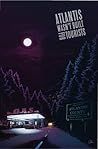
Review: Atlantis Wasn’t Built For Tourists

Atlantis Wasn’t Built For Tourists Atlantis Wasn’t Built For Tourists by Eric Palicki
My rating: 3 of 5 stars

In the vain of summoning things up: strong start, okay finish. It's the easiest way to describe how I feel about this book. I went in loving the title and came out with a strong meh feeling. There is some good writing and art, but its underlining issues are a little too large to ignore. But I stand by my first statement. Feel free to skip the rest of this review if you feel I don't need to break it down for you.

The book does a good job of starting off by subverting expectations. Here the thing though, if you subvert expectation, then subverting expectation becomes the expectation. Someone who does the opposite of the norm can still find himself being predictable. I appreciated the twists early on but found myself staying several panels ahead of the story by the end. I still found the writing to be good, just not overly clever.

The world-building also is fairly rudimentary and doesn't provide me with enough to stay invested. I enjoyed my time in Atlantis, but never felt I should stay. I passed through, had a beer, and went on my way. I don't want to use the word 'disappointed' but I can't think of a way to describe treating the franchise like a tourist stop. I read but didn't want to keep reading.

The art is good but felt more work went into the covers than the interior. Not just in the level of detail, but also in how the covers seemed to draw in more creative ideas. Setting expectations can be a two-edged sword. If you don't follow a great cover with great art, it's difficult to maintain readership. The key isn't to sell your story, the key is to keep selling your story.

If someone asked me if I'd recommend this book, I'd say yes but with tempered expectations. Just because something isn't the greatest book in the world, doesn't mean it isn't worth your time. You just have to accept not everything is the best. Not everyone can be Tom King.

View all my reviews

Wednesday, September 29, 2021

Review: Go Tell It on the Mountain

Go Tell It on the Mountain Go Tell It on the Mountain by James Baldwin
My rating: 4 of 5 stars

I almost feel that the Bible should be required reading for this novel. And I mean a deep understanding of the scripture. Not just knowing whatever was in a Charlton Heston movie. The entirety of the book's structure and symbolism relies so much on biblical knowledge, and with almost zero prefacing of said knowledge, that you can easily miss much of the book's meaning without knowing every verse of both testaments. I don't mean this as a knock against it, instead being more of a warning.

Though, I will say such reference isn't needed to follow along, just that it's necessary to unpack everything. There isn't much of a plot as the main character is much more of an observer than a driver. There are also long-drawn-out deconstructions of religious themes and their impact on racial lines. Frankly, the book's impact on you as a reader depends mostly on the weight of its ideas. Growing up in a fairly lite religious environment, I honestly feel much of the book was lost on me. It's still very good, it just won't stick with me as much as it might with someone else.

Prose-wise, the book is pure gold. With nearly every damn line, I am easily impressed with how beautiful Baldwin's writing is. I keep trying to come up with a way to inform people of how good it is, but I never come up with anything that does it justice. You just need to read it for yourself.

I generally feel it's not good policy to compare books, even by the same author. More so, a first novel going up against a later work.  Still, I'm just not as enamored with this novel as I was with Beale Street. The latter having a greater focus and purpose, the former more concerned with its symbolism. It can be argued, mainly by myself, that Beale might just be the better work as the author has further honed his craft. It's an unfair critique, but one I couldn't help but express.

If you're looking to tackle Baldwin, this might be a good place to start. I'm all over the place at the moment, with no real plan as to what order to read his work. It's probably not the best way to do it, but I think each work should stand on its own merits. Despite its greater symbolize to plot ratio, it's still a worthy read of nearly everyone on the planet. Not my favorite of Baldwin's work, but even his worst story is better than most's magnum opus.

View all my reviews

Wednesday, September 8, 2021

Review: Terra Nullius

Terra Nullius Terra Nullius by Claire G. Coleman
My rating: 3 of 5 stars

There's an old adage: If you have to explain a joke, then it isn't funny. The same is true for allegories in books. If you make long winded explanations of your allegories, then it isn't a good one. That's basically this entire book. It's one big allegory but goes out of its way to explain itself. It's also badly paced and underrealized. But I'll get to that in a minute.

I think this novel's biggest problem is that it begins and ends at the wrong points. The first nine chapters are completely bogus and it just fumbles around with itself because the author thought it would be clever to hide the true aspect of the actual plot. It wasn't. I've heard people refer to what happens in chapter 10 (about halfway into the novel) as a 'twist', but it's not. It's just where the book gets started. Because it's so committed to this subversion, the plot of the first half of the novel has to remain razor thin. It might seem clever when you look at it from an overview kind of way, but from a chapter by chapter reading, it's just boring.

My biggest issue with the reveal is that, in chapter 12, it gives a rather long explanation of its entire allegory. There's a settler/exploited native dynamic going on that ties in with our own history but feels the need to spell it out for you. Yeah, I understood what you were going for. It's obvious. Yet, the book seems to want to repeat the explanation over and over and over again. What comes closest to a main character even repeats this sentiment several times as if it's their sole attribute. Either the author thinks their idea was so clever that it needs to be explained, or they think we're too ignorant to understand it. Either way, it's a knock against them.

Prose-wise, the book is alright. Lines can range from extremely literal to insanely metaphorical, but I understood what was going on at all times. So it's at least competently written. There's just not a great deal to attach yourself to beyond the premise. So, when things happen in what seems like slow motion, I found it difficult to care.

The world-building is well conveyed but underrealized. What I mean is that you only know what is important, but what is important is also convenient to the plot. To say something is completely alien but also say it can speak and act like a human, contradicts your own world-building. Everything explained about the world just feels like a convenience so the story in the author's head can be told. It's also not that creative, but I think my review already conveys my opinion of that aspect.

And while the book begins in the wrong spot, it also ends before anything is truly resolved. I was starting to like the book by the end, but it wants to so badly conclude on a sour note that it left me unfulfilled. The ending feels more like a middle act plot turner and the rest of the book would deal with the aftermath. Sadly, it ends there. I don't know if the author just wants to introduce everything to write a whole series, but the pacing is so bad that I would find it hard pressed to pick up a second novel.

Ray Bradbury said that a good story with a bad ending is a bad story, and a bad story with a good ending is a good story. Yes, I'm paraphrasing but that doesn't exclude the point. The latter half of the book is certainly better than the former, but the ending doesn't feel like an ending. So I'm conflicted. Somewhat liking the last few chapters doesn't make me forget all the thumbing around and condescending explanations. But it doesn't give me a strange compulsion to read it again. Not to enjoy it of course, but it only further dissect it. Like a toad.

View all my reviews

Friday, August 27, 2021

Review: Becoming a Writer, Staying a Writer: The Artistry, Joy, and Career of Storytelling

Becoming a Writer, Staying a Writer: The Artistry, Joy, and Career of Storytelling Becoming a Writer, Staying a Writer: The Artistry, Joy, and Career of Storytelling by J. Michael Straczynski
My rating: 4 of 5 stars

One of the worst things about advice is that it's not always practical. This seems to be especially true the more subjective the opinion on a subject is. Example: you're about to leave the house and you check the forecast. It tells you it's raining outside. You look out the window and, sure enough, water is indeed falling from the sky. Here's the thing. Being told it's raining outside isn't the practical advice. It's only the information used to establish said advice. The practical advice would be to grab an umbrella or a raincoat. That seems a little obvious given the subject, but I'm merely using it as a framework for something more complex.

Not only is most advice about art (writing in this case) is subjective. It's also rarely practical. I once had a potential agent say my cover letter needed to be more vibrant. The thing is, that doesn't actually mean anything. She was telling me it was raining outside without any regard to using an umbrella. I tend to see this a little too often. Either the person giving advice doesn't know what they're talking about, or they're attempting to sandblast writing so it all sounds the same.

Is Straczynski, and his new book on writing, guilty of this? No. But I'm laying this out to explain how I approach writing advice. I don't just use a grain of salt, I unscrew the top and use the whole fucking shaker.

Before I render my judgment on if the book is any good, I also need to layout who this book is for. Unlike most works, this is more of a textbook. You might be faced with the greatest book on algebra ever written, but if you don't have a class or a job involving algebra, it's pretty much useless to you. Breaking down the audience into two groups.

The first group is fans of JMS's work who wish insight into his writing process. It carries many personal stories of his career and his perspective into the industry he's worked in for decades. The level of sharpness of this aspect really did catch my eye and I think anyone who loves his work will get something worthwhile here. So, if you're reading this review wearing a Babylon 5 T-shirt, go ahead and read this book.

The second group needs a little more justification. And that's people who are looking to becoming paid writers. I said 'paid' because you're either already a writer or you're not. Also, as a disclaimer, if you're the type who uses the label of a writer and haven't actually written anything down, this book isn't for you. In particular, there's a section of the book that calls out posers. So save yourself the heartache and avoid this book. And me.

To the point made at the beginning, this book does offer up some helpful advice. If you're looking to crack into the business and/or looking to improve your craft, you should be able to find something here that applies to you. One piece of advice though: grab a highlighter. You're going to want to mark the relevant bits.

See, that's how practical advice works.

Since I can't resist saying something negative, I'll put it down here towards the end. There are a few sections in the book that are less helpful than others. There's an entire chapter towards not shoving your ideas in writers' faces. Good advice, but the chapter could have been a lot shorter and seemed a little too personal. I know many artists face this problem. There's even a Chappelle Show skit about that very problem. So, while I understand the frustration, I doubt most of those people are going to be reading this book. Or read period.

Regardless if you're in groups A or B (or maybe both, who knows?), I'd recommend this book. The use of real world examples can get a little straining, but JMS needs to establish himself so you don't think he's talking out of his ass. Trust me. He's mostly not.

View all my reviews